
Kandinsky6 SR
ComfyUI nodes for Kandinsky 6 video super-resolution (x2 / x2.25 / x4, tiled latent upscaler + DiT).
<a href="https://kandinskylab.ai/"><img alt="KandinskyLab" src="https://img.shields.io/badge/KandinskyLab-76E0B7?style=for-the-badge"></a> <a href="https://arxiv.org/abs/2610.05608"><img alt="Report" src="https://img.shields.io/badge/Report-9C2731?style=for-the-badge"></a> <a href="https://github.com/kandinskylab/kandinsky-6"><img alt="Kandinsky 6" src="https://img.shields.io/badge/Kandinsky%206-181717?style=for-the-badge&logo=github&logoColor=white"></a> <a href="https://huggingface.co/spaces/kandinskylab/Kandinsky-6.0-VSR-Demo"><img alt="HF Demo" src="https://img.shields.io/badge/HF%20Demo-D9622B?style=for-the-badge"></a> <a href="https://huggingface.co/collections/kandinskylab/kandinsky-60-vsr"><img alt="HF Models" src="https://img.shields.io/badge/HF%20Models-FFD21E?style=for-the-badge"></a> <a href="https://huggingface.co/docs/diffusers/main/en/api/pipelines/kandinsky6#video-super-resolution"><img alt="Diffusers" src="https://img.shields.io/badge/Diffusers-F8D44E?style=for-the-badge"></a> <a href="https://docs.vllm.ai/projects/vllm-omni/en/latest/api/vllm_omni/diffusion/models/kandinsky6_sr/"><img alt="vLLM-Omni" src="https://img.shields.io/badge/vLLM%20Omni-54A0F8?style=for-the-badge"></a> <a href="https://docs.sglang.io/cookbook/diffusion/Kandinsky/Kandinsky6-SR"><img alt="SGLang" src="https://img.shields.io/badge/SGLang-C6602D?style=for-the-badge"></a> <a href="https://haoailab.com/FastVideo/inference/kandinsky6_sr/"><img alt="FastVideo" src="https://img.shields.io/badge/FastVideo-436BF6?style=for-the-badge"></a> <a href="https://registry.comfy.org/nodes/kandinsky6-sr"><img alt="ComfyUI" src="https://img.shields.io/badge/ComfyUI-EBF764?style=for-the-badge"></a>
</div>Kandinsky 6.0 Video Super-Resolution
Tiled video super-resolution for the Kandinsky 6.0 Video pipeline: KVAE encode → latent upscaler → DiT (tiled) → KVAE decode, x2 / x4 / x2.25 upscale of clips up to 15 seconds (361 frames at 24 fps; the model was trained on 5-second clips). Shipped as the kandinsky-6-sr package (import name kandinsky_sr) with the kandy-sr CLI; the Kandinsky 6 pipeline embeds it for generation-then-SR.
📰 News
- 2026/11/26: Released Kandinsky 6.0 VSR 2.0 — Kandinsky-6.0-VSR-2.0-distilled2steps-Diffusers: more natural generation and a noticeably cleaner x4 upscale (SD → 2K).
- 2026/10/23: Kandinsky 6.0 and Kandinsky 6.0 VSR are available in 🧨 Diffusers v0.42.0 (
Kandinsky6TI2VAPipeline,Kandinsky6SRPipeline,PiflowScheduler). - 2026/10/06: We open-sourced Kandinsky 6.0 and Kandinsky 6.0 Video Super-Resolution, together with the technical report.
🚀 Getting Started
Diffusers
Kandinsky 6.0 VSR ships in 🧨 Diffusers starting from v0.42.0:
pip install "diffusers>=0.42.0" transformers accelerate
transformers and accelerate are required: without transformers Diffusers exposes Kandinsky6SRPipeline only as a placeholder that fails on from_pretrained, and without accelerate the transformer cannot keep its fp32 modules while loading.
[!IMPORTANT] With the distilled checkpoints, always pass
num_inference_steps=2. They are distilled for exactly 2 model evaluations per tile, butKandinsky6SRPipelinedefaults to 4 steps (the flow-matching setting) and does not take the step count from the bundle, so leaving the argument out runs the model off its trained schedule.kandy-srand the ComfyUI nodes read it from the bundle and need nothing extra.
import torch
from diffusers import Kandinsky6SRPipeline
from diffusers.utils import export_to_video, load_video

torch._inductor.config.max_autotune = True  # required: lets inductor pick flex-attention tiles that fit the SR block mask

pipe = Kandinsky6SRPipeline.from_pretrained(
    "kandinskylab/Kandinsky-6.0-VSR-2.0-distilled2steps-Diffusers", dtype=torch.bfloat16
)
pipe.enable_model_cpu_offload()
pipe.transformer.set_attention_backend("flex")
pipe.transformer.compile_repeated_blocks(fullgraph=True)

video = load_video("lq.mp4")  # -> list[PIL.Image.Image], 1 + 4k frames (e.g. 121)
output = pipe(
    video=video,
    resolution_scale=2.25,  # 2, 2.25 or 4
    num_inference_steps=2,  # required, see the note above
    generator=torch.Generator("cuda").manual_seed(1137),
)
export_to_video(output.frames[0], "lq_sr.mp4", fps=24)
The Diffusers pipeline is video-only; mux the source audio back in if you need it. A step-by-step version is in notebooks/sr_inference_example_diffusers.ipynb. See the Diffusers Kandinsky 6 docs for details.
The model also runs in vLLM-Omni, SGLang and FastVideo.
Manual setup (this repository)
The kandy-sr CLI and the kandinsky_sr package run the same bundles with extra speedups (NABLA CuteDSL, tiled split / MagiCompiler KVAE), audio passthrough, delivery-resolution resizing and ComfyUI nodes.
1. Install
Install the base package from GitHub. The default KVAE backend is the tiled split VAE. NABLA defaults to CuteDSL (nabla: cutedsl) when flash-attn-4 is installed, and stays on the block-64 kernel otherwise:
pip install "kandinsky-6-sr[flash4] @ git+https://github.com/kandinskylab/kandinsky-6-sr"
# CUDA 13: pip install "kandinsky-6-sr[flash4-cu13] @ git+https://github.com/kandinskylab/kandinsky-6-sr"
flash-attn-4 provides flash_attn.cute, which FlexAttention BACKEND=FLASH imports. If that extra cannot be installed, install flash-attn 2 instead. NABLA then uses the block-64 kernel, and the dense flash paths use FA2:
pip install "kandinsky-6-sr[flash] @ git+https://github.com/kandinskylab/kandinsky-6-sr"
In a checkout, just setup does the same: it installs flash-attn-4 (the flash4-cu13 extra on CUDA 13) and falls back to flash-attn 2 when that install fails.
With the MagiCompiler KVAE backend (vae_backend: magi, Linux with NVIDIA CUDA):
The [magi] extra installs the supporting dependencies. MagiCompiler itself is
not available on PyPI and must be installed separately from its v1.1.0 Git tag
(the older v1.0.0 is not compatible):
pip install "kandinsky-6-sr[magi] @ git+https://github.com/kandinskylab/kandinsky-6-sr"
# pip install "kandinsky-6-sr[magi]"
pip install "setuptools>=61.0" wheel versioningit
pip install --no-build-isolation "magi_compiler @ git+https://github.com/SandAI-org/[email protected]"
Install the system Graphviz executable as well (Ubuntu/Debian: sudo apt install graphviz).
In a checkout, just setup-magi installs both the extra and MagiCompiler.
For a locally built wheel, replace the first command with
pip install "./dist/kandinsky_6_sr-1.0.0-py3-none-any.whl[magi]".
Select vae_backend: magi in the config to enable it.
2. Setup config
# sr_config.yaml
sr:
  checkpoint_path: kandinskylab/Kandinsky-6.0-VSR-2.0-distilled2steps-Diffusers
  resolution_scale: 2      # 2, 4 or 2.25
  device: cuda:0
The models are published as Diffusers bundles: one repository holds the SR DiT, the KVAE and the x2 / x4 latent upscalers, and checkpoint_path alone loads all three (downloaded into the HF cache on first use). Three bundles are available — the 2-step π-Flow distilled VSR 2.0 Kandinsky-6.0-VSR-2.0-distilled2steps-Diffusers (recommended), the first π-Flow release VSR 1.0 Kandinsky-6.0-VSR-distilled2steps-5s-Diffusers, and the flow-matching teacher Kandinsky-6.0-VSR-5s-Diffusers; a local copy of a bundle works the same way (checkpoint_path: /path/to/bundle).
vae_path and latent_upscaler_config are only needed to take those models from somewhere else, e.g. vae_path: kandinskylab/Kandinsky-6.0-VSR-5s-Diffusers/vae. All parameters: Config parameters.
3. Run Inference
kandy-sr from-video --config sr_config.yaml --input lq.mp4 --output-dir outputs

# any config value can be overridden from the CLI, e.g. the GPU and x4 upscale
kandy-sr from-video --config sr_config.yaml --input lq.mp4 --output-dir outputs \
    --device "cuda:0" --resolution-scale 4 --vae-backend magi
--config can be replaced by the KANDY_SR_CONFIG env var; explicit CLI options override the YAML (kandy-sr from-video --help lists them).
Note (
vae_backend: magi): if the run fails withRuntimeError: CUDA driver error: invalid argument, the MagiCompiler cache holds artifacts built for another GPU / torch build — point it at a fresh directory:MAGI_COMPILE_CACHE_ROOT_DIR=/path/to/new_cache_dir kandy-sr ....
From Python (see notebooks/sr_inference_example.ipynb):
from kandinsky_sr.pipeline.factory import load_sr_pipeline

sr_pipeline = load_sr_pipeline("sr_config.yaml", device="cuda:0", force=True)
result = sr_pipeline(video=frames_tchw_uint8, source_video="lq.mp4", save_path="outputs/sr.mp4")
Several equal-shaped clips go through in one call: pass video as a [B, T, 3, H, W] tensor (or a list of clips) and save_path / source_video as lists — see notebooks/sr_batch_inference_example.ipynb.
load_sr_pipeline also accepts an SRConfig; pass offload= (any kandinsky_sr.core.utils.offload.OffloadHandle) to let the host pipeline manage module residency — the DiT, KVAE and latent upscaler are registered as dit, vae, latent_upscaler.
ComfyUI
For ComfyUI, install kandinsky6-sr through ComfyUI Manager, then restart ComfyUI.
The comfyui/ directory contains extension source code; no manual copying is needed — see the setup guide and manual model downloads.
Inference Time on H100
Measured with the 2-step distilled SR DiT of VSR 1.0 (Kandinsky-6.0-VSR-distilled2steps-5s-Diffusers; VSR 2.0 has the same architecture and step count) on a 5-second (121 frames, 24 fps) 768×512 clip, torch 2.10.0+cu128, with the KVAE decode precompiled at load (kandy-sr default) and --warmup.
The time covers the SR pass itself (whole-clip KVAE encode, per-tile latent upscale, DiT and KVAE decode, and Hanning-blend stitching), excluding model load, warmup, video reading and saving.
| Input (W×H) | Scale | Output (W×H) | Tiles | Time | |:---:|:---:|:---:|:---:|:---:| | 768×512 | ×2 | 1536×1024 | 9 | 41 s | | 768×512 | ×4 | 3072×2048 | 25 | 118 s |
Config parameters (sr: section)
<details>
<summary>Full parameter reference</summary>
Schema: src/kandinsky_sr/pipeline/config.py::SRConfig. The same section works in a standalone SR YAML and inside a full k6 pipeline config.
| Parameter | Default | Description |
|---|---|---|
| checkpoint_path | — (required) | The SR DiT: a Kandinsky6SRPipeline Diffusers bundle — a Hugging Face repo id (e.g. kandinskylab/Kandinsky-6.0-VSR-2.0-distilled2steps-Diffusers) or a local copy of it — whose transformer/ and scheduler/ folders are read. A native DiT checkpoint works too: a dir with model.safetensors + config.yaml, a .safetensors/.pt file, or a sharded model/ dir. |
| vae_path | the bundle's vae/ | Video KVAE. Unset = the VAE of the checkpoint_path bundle. Otherwise a bundle (repo id or local dir), its component (<repo>/vae or a local vae/ dir), or a native KVAE: a sidecar pair ({prefix}.yaml + {prefix}.safetensors / {prefix}.ckpt, given as the prefix or its directory) or the config.json + model.safetensors layout of the public KVAE 2.0 checkouts. Required with a native DiT checkpoint. |
| latent_upscaler_config | the bundle's latent_upscaler/ | Latent upscalers (x2 and x4). Unset = the bank of the checkpoint_path bundle. Otherwise a bundle (repo id or local dir), its component (<repo>/latent_upscaler or a local latent_upscaler/ dir), or a native LU bank YAML (architectures + checkpoints; relative checkpoint: entries resolve against the YAML's directory) or the directory holding it. "none" disables the LU (pixel path). Required with a native DiT checkpoint. |
| resolution_scale | 2.25 | Total upscale factor: 2, 4, or 2.25 (x1.125 pixel pre-upscale + x2 tiling). |
| num_steps | 5 | Denoising grid points per tile (N points = N−1 steps). Ignored by π-Flow-distilled checkpoints (they run at the trained nfe). |
| vae_backend | split | KVAE compilation backend: split (tiled torch.compile KVAE; encode and decode tile internally, so decode_spatial_splits is forced to 1), torch (per-block torch.compile), or magi (MagiCompiler, needs the magi extra and separate compiler installation). |
| nabla | cutedsl | Sparse self-attention. cutedsl mean-pools each 8×16 tile, takes top-cdf and runs FlexAttention CuteDSL at block 128 (needs flash-attn-4). Without that package the load stays on flex, the block-64 NABLA. |
| device | cuda:0 | CUDA device the pipeline runs on; --device overrides. |
| seed | 42 | Noise seed (per-tile-chunk deterministic). |
| tiles_batch_size | 1 | Tiles per DiT call; larger = better GPU utilisation, more peak memory. |
| overlap | 0.20 | Minimum overlap between neighbouring tiles as a fraction of the tile size; the grid uses the fewest tiles with uniform overlap ≥ this. |
| decode_segment_frames | 0 (backend default) | Pixel frames per temporal segment of the KVAE decode (torch backend only). Smaller segments cut decoder peak memory; 0 keeps the backend default (KVAE_DECODE_SEG, 16). |
| decode_spatial_splits | 1 | Vertical strips the KVAE decode is split into; each strip is decoded on its own and the strips are cross-faded. 1 decodes the whole tile at once; 2 roughly halves decoder peak memory. |
| decode_spatial_overlap | 4 | Latent columns of overlap between neighbouring decode strips (16 px per column); the cross-fade hides the strip seams. Ignored with decode_spatial_splits: 1. |
| lu_load_scales | null (all) | Bank entries (by target_scale, e.g. ["2x"]) loaded eagerly at startup; unlisted entries lazy-load on first use. |
| target_resolution | null (raw) | Downscale the SR result to a delivery tier (hd / fullhd / 2k) or an explicit WxH. |
| target_resize_mode | fit | fit preserves aspect exactly; exact resizes to the precise bucket dimensions. |
| instruct_type_override | noise | Post-load DiT instruct_type override (noise starts denoising from the LQ latent); null keeps the checkpoint config's value. |
| dit_overrides | null | Extra KEY: VALUE attribute overrides applied to the loaded DiT via setattr. |
| enabled, mode, kvae_bridge, source_vae_path | — | k6-embedded route only (kandy generate with SR); ignored by the standalone kandy-sr CLI. |
Model-contract values (trained fps/frame budget, base resolutions, delivery-tier tables) are intentionally not configurable — they live in constants.py.
Inference Pipeline
<div align="center"> <img src="assets/inference_pipeline.svg" alt="SR inference with latent upscaler: latent tiling, per-tile latent upscale, LQ-latent degradation, iterative DiT denoising, KVAE decode, Hanning-blend stitching" width="100%"> </div>The input video is encoded once with the KVAE-3D-2.0-t4s16 video tokenizer and the LQ latent is split into an overlapping tile grid. Each tile is upscaled by the learned latent upscaler (×2 / ×4), mixed with variance-preserving noise (the LQ-latent degradation the model was trained on) and used as the starting point of the denoising loop — the SR DiT predicts the velocity and an Euler step moves the latent towards t→0 (the distilled checkpoint needs 2 evaluations, the flow-matching one a few more). Every denoised tile is KVAE-decoded, and the HQ tiles are stitched back with Hanning-window blending.
Any input resolution works. The latent path needs the clip on the KVAE stride (16 px) and at least one tile wide and high, so the pipeline pads it bottom/right with a mirrored strip before the encode and crops the stitched result back to exactly source × scale — callers never resize or align their videos.
Examples VSR 2.0
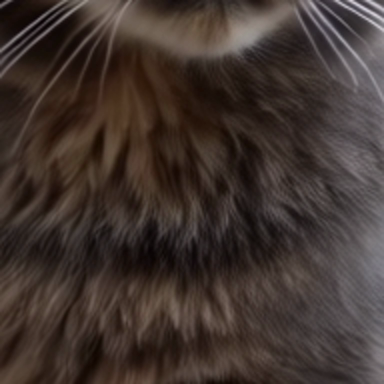
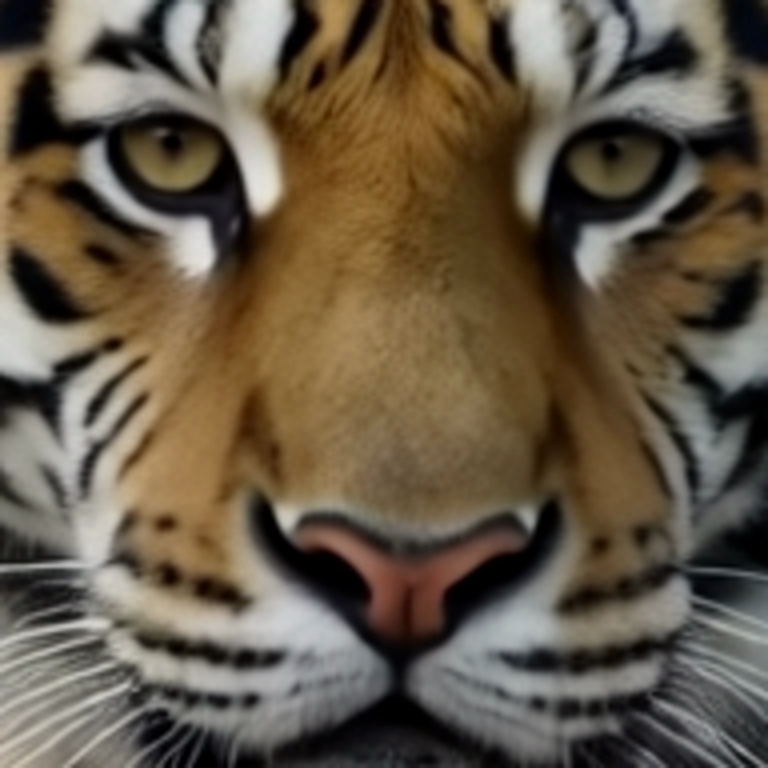
<details> <summary>Show the VSR 2.0 examples</summary>Outputs of the VSR 2.0 2-step distilled SR DiT (Kandinsky-6.0-VSR-2.0-distilled2steps-Diffusers) on generated 768×512 clips. The second row zooms into the same region of one frame (the LR crop is upscaled bicubically to the SR size).
| LR input (768×512) | SR ×2 output (1536×1024) |
|:---:|:---:|
| <video src="https://github.com/user-attachments/assets/b04a25c8-37c6-4da4-8208-34cd7d4a140b" controls width="480"></video> | <video src="https://github.com/user-attachments/assets/3936775e-3b40-4633-9519-ea1da13e6c4e" controls width="480"></video> |
|  |
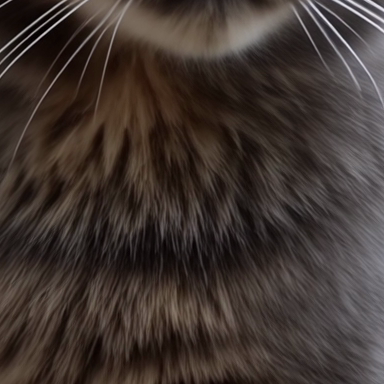 |
| crop, bicubic ×2 | crop, SR ×2 |
| LR input (768×512) | SR ×4 output (3072×2048) |
|:---:|:---:|
| <video src="https://github.com/user-attachments/assets/a3b85b5d-3b6f-45cf-ab3c-d6fa6ce884b6" controls width="480"></video> | <video src="https://github.com/user-attachments/assets/5a377c9d-aa5c-4ecc-98a4-968bf9dda99e" controls width="480"></video> |
|  |
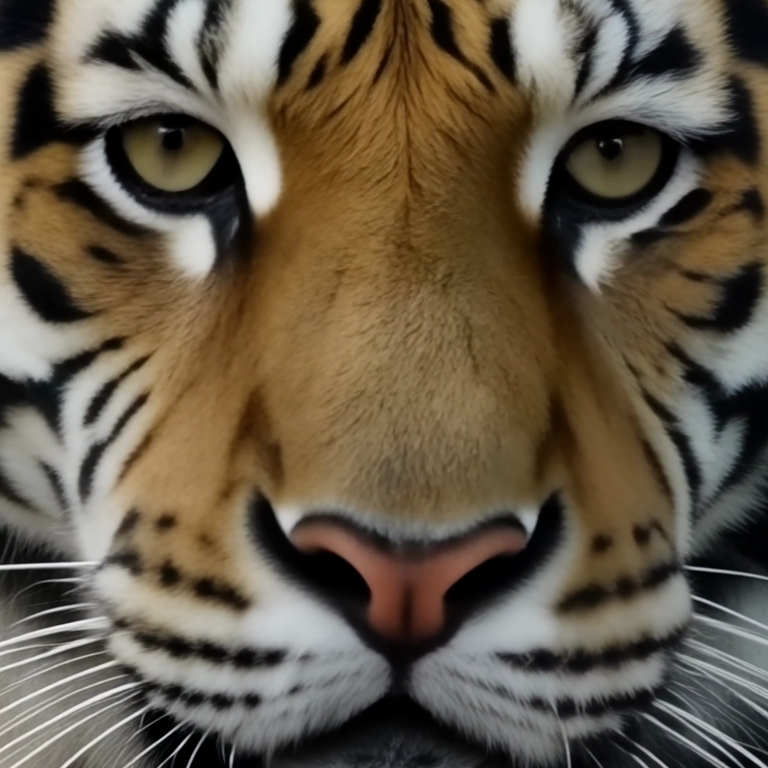 |
| crop, bicubic ×4 | crop, SR ×4 |
Examples VSR 1.0
<details> <summary>Show the VSR 1.0 examples</summary>Outputs of the first release of the 2-step distilled SR DiT (Kandinsky-6.0-VSR-distilled2steps-5s-Diffusers) on 768×512 clips generated by Kandinsky 6.0 Video. The second row zooms into the same region (the LR crop is upscaled bicubically to the SR size).
| LR input (768×512) | SR ×2 output (1536×1024) |
|:---:|:---:|
| <video src="https://github.com/user-attachments/assets/db2e8148-08be-4834-9c89-9f16b4e14e4c" controls width="480"></video> | <video src="https://github.com/user-attachments/assets/0aa4eaf5-0bf8-4f88-80db-054f675c62d5" controls width="480"></video> |
| 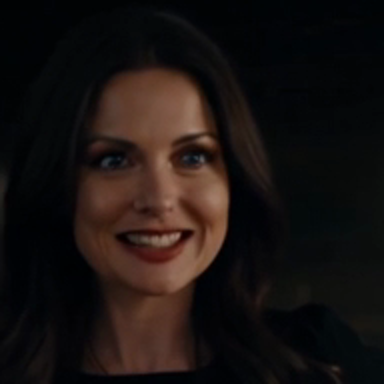 |
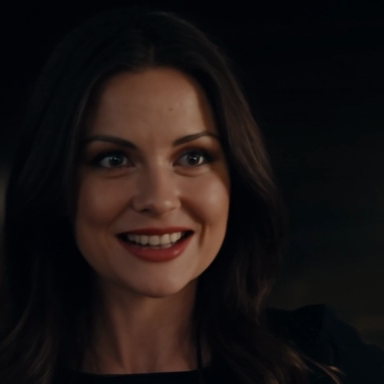 |
| crop, bicubic ×2 | crop, SR ×2 |
| LR input (768×512) | SR ×4 output (3072×2048) |
|:---:|:---:|
| <video src="https://github.com/user-attachments/assets/337834ed-60c8-4f39-ad11-3204454017a7" controls width="480"></video> | <video src="https://github.com/user-attachments/assets/736340d3-319d-4ba4-bd2e-df58d0c38dce" controls width="480"></video> |
| 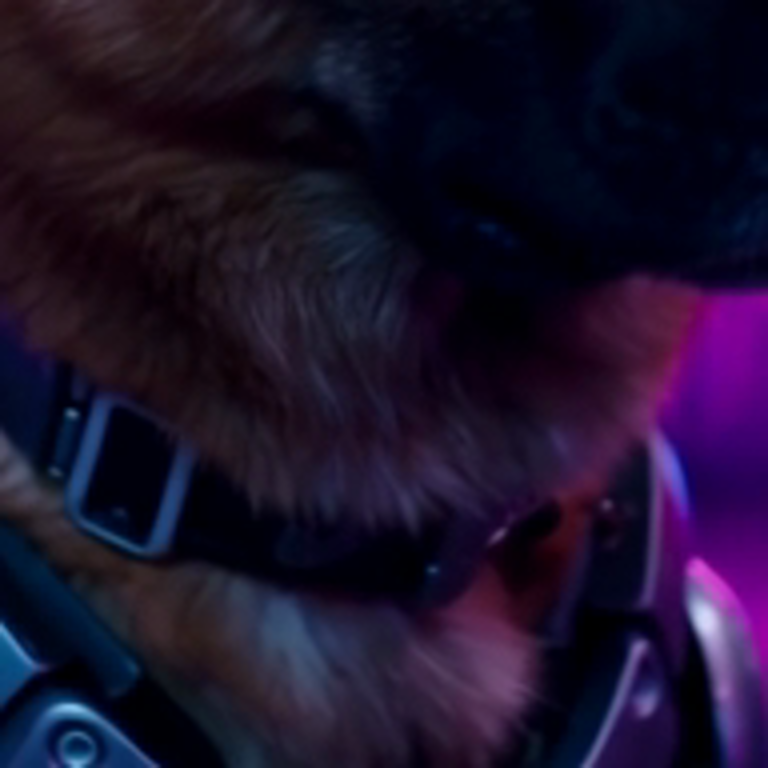 |
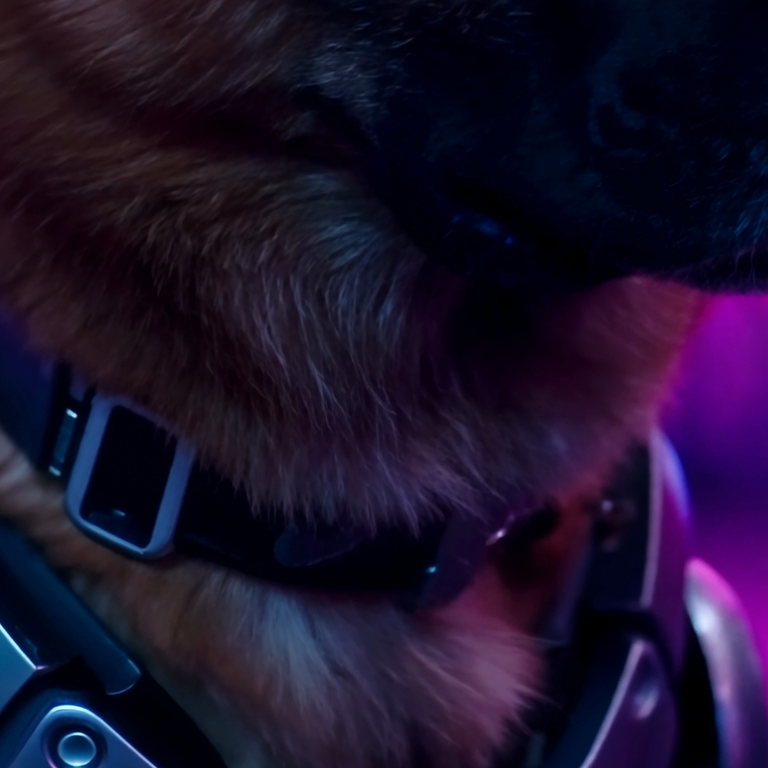 |
| crop, bicubic ×4 | crop, SR ×4 |
License
This project is licensed under the MIT License. Diffusers export templates retain their Apache-2.0 notices; see LICENSE-APACHE.
Citation
If you use this model in your research or applications, please cite the Kandinsky 6.0 technical report:
@misc{kandinsky2026kandinsky60videofoundation,
      title={Kandinsky 6.0 Video: Foundation Models for Synchronized Video and Audio Generation},
      author={Team Kandinsky},
      year={2026},
      eprint={2610.05608},
      archivePrefix={arXiv},
      primaryClass={cs.CV},
      url={https://arxiv.org/abs/2610.05608},
}