
ComfyUI Field
Resolution-independent procedural fields for driving and masking effects. Perlin, simplex, value and Worley noise as pure functions of normalised coordinates, with a probability-integral-transform coverage control; analytic gradients shaped by a draggable stops-ramp widget; exact SDF shapes, tile lattices and scattered stamps; threshold, morphology, exact Euclidean distance, warp and combine nodes for reshaping; fields derived from the image itself via luma, edges and local contrast; and a mask-driven compositor that makes any global effect spatially varying.
Nodes (15)
The Mask-Math Node You'll Reach For More Than You Expect
Make Any Effect Follow a Mask Instead of the Whole Frame
Turn a Hard Mask Into a Gradient You Can Actually Breathe With
Mask the Busy Parts of an Image, Not the Bright Ones
Sobel, Scharr, Laplacian — and a Canny That Behaves
Nine Ways to Turn a Picture Into a Mask
Six Ramps and a Curve Editor That Doesn't Suck
Grow, Shrink, Feather and Outline Without the Jagged Edges
Perlin, Simplex and Worley That Look the Same at Every Resolution
Levels and Curves, for Masks
Stamps on a Lattice, Deterministically
Circles, Rectangles, Polygons and Stars as Exact Distance Fields
Select the Top 30% of Any Mask, Whatever Its Histogram
Checker, Brick, Herringbone and Hex — With Mortar and Jitter
Melt, Smear and Drag Your Masks Around
ComfyUI-Field
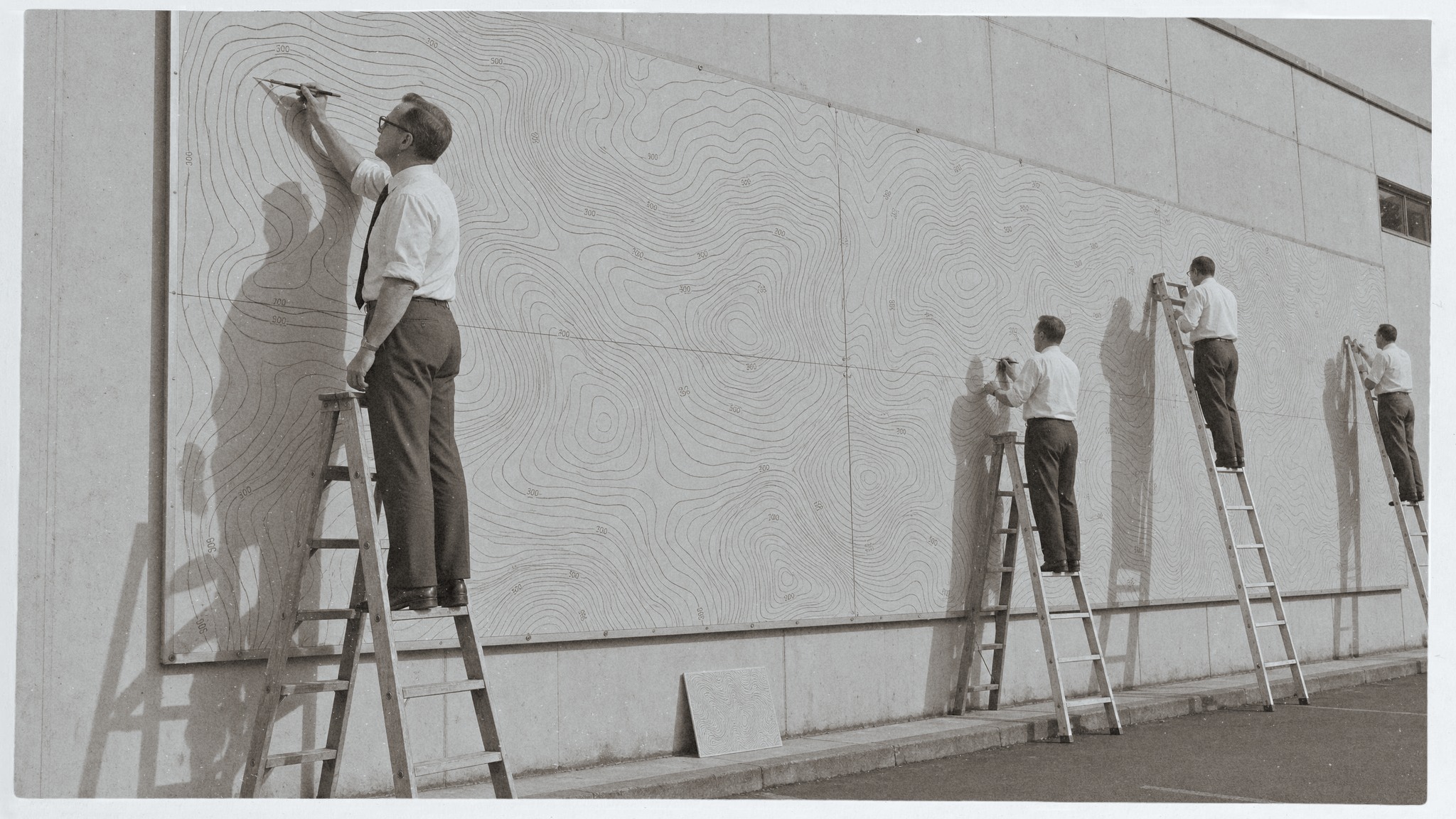
Procedural fields for ComfyUI: noise (Perlin, simplex, value, Worley), analytic ramps, exact shapes, tile patterns and scattered stamps, all generated as pure functions of position rather than pixel index. A field looks the same shape at any resolution and any aspect ratio, so a 512 preview and a 4K render show the same picture, just sampled more finely.
Fifteen nodes, all under AKURATE/Fields/. Procedural generation leads; image-derived
fields are an additional source that composes with it.
Generate
- Field Noise (
Generate): the noise generator. Five noise types, fBm octaves, and acoveragecontrol that means the same thing regardless of type or settings. - Field Gradient (
Generate): six analytic ramps (linear U/V, radial, diamond, box, angular) shaped by a stops ramp with a draggable curve editor, the DCC ramp widget. - Field Shape (
Generate): circle, rect, polygon, star as exact signed distance fields.size_x/size_yare the drawn half-extents; typed size is drawn size. - Field Tile (
Generate): checker, brick, herringbone and hex lattices with mortar, per-cell height profiles and seeded per-cell jitter. - Field Scatter (
Generate): one exact SDF stamp per lattice cell, with occupancy, position, size, rotation and value jitter from a per-cell hash.
Shape and refine
- Field Remap (
Reshape): a fixed monotone curve pipeline (invert, normalize, input window, gamma, S-curve, output window) for reshaping any MASK, generated or not. - Field Threshold (
Reshape): hard, smooth, band and posterize. The threshold can be given as a level or as a coverage, in which case it selects the top N% of any input whatever its histogram. - Field Distance (
Reshape): exact Euclidean distance from a mask, outward, inward or signed. Measured to the contour, not to pixel centres. - Field Morphology (
Refine): grow, shrink, feather, outline. The structuring element is an isotropy-solved octagon, not a square. - Field Warp (
Reshape): displaces a mask along a fixed direction, along the slope of a drive field, or by an iterated slope smear. Self-warps when no drive is wired.
Combine
- Field Combine (
Combine): eight operations between two fields, plus a blend amount. - Field Composite (
Combine): a mask-driven dissolve between two images, the retrofit node that turns a uniform effect into a spatially varying one.
Derive (fields that respond to the picture)
- Field From Image (
Derive): luma, RGB, HSV and min/max channels. - Field From Edges (
Derive): Sobel, Scharr, Laplacian, and Canny-style hysteresis. - Field From Detail (
Derive): local contrast, as a true local standard deviation.
Every node that produces a field shares one output convention, so coverage = 0.3 is the
same instruction whether the source is Perlin noise, an edge map or local contrast. That is
what makes Field Combine between them meaningful.
Why resolution independence matters
The two classic bugs this pack exists to avoid:
- Frequency keyed to pixel index. Noise driven directly by pixel coordinates changes its feature count with the render resolution. A 512 preview and a 2048 render become different pictures.
- Per-axis normalisation. Dividing
xby width andyby height separately fixes the feature count but stretches every feature by the aspect ratio. A circle on 16:9 renders as a 1.78:1 oval.
Field fixes both at once: both axes are divided by S = max(width, height), so scale is
"cells across the longer edge" at every resolution and every aspect ratio, and shapes stay
round. Doubling the resolution resamples the same function at twice the density; it does not
draw a different picture.
Field Noise
| widget | default | range | notes |
|---|---|---|---|
| noise_type | perlin | perlin, simplex, value, worley_f1, worley_f2f1 | |
| scale | 6.0 | 0.1 to 512 | lattice cells across the longer output edge |
| octaves | 4 | 1 to 8 | fixed regardless of resolution. Two separate console warnings: trailing octaves are dropped if the finest would pass the hash table's 4096 cell period, and a note fires (without changing anything) if the finest octave falls below 2 pixels per cell and will alias |
| gain | 0.5 | 0 to 1 | amplitude falloff per octave |
| lacunarity | 2.0 | 1 to 4 | frequency multiplier per octave |
| coverage | 0.5 | 0 to 1 | fraction of the frame above the midpoint; 0.5 is an exact no-op |
| distribution | uniform | uniform, native | see below |
| seed | 0 | 0 to 2^32-1 | drives the hash tables and a lattice offset |
| width / height | 512 / 512 | 16 to 8192 | ignored if a reference is wired |
| offset_x / offset_y | 0.0 | -4.0 to 4.0 | pan across the field, in frames: 1.0 shifts by one frame width |
Optional reference_image / reference_mask inputs pull width, height, batch size and
device from whatever is wired in, so a field automatically matches what it drives. If both
are wired, the image wins and the console prints a note.
Outputs are mask (MASK) and preview (IMAGE, the mask replicated to 3 channels).
distribution: uniform vs native
Noise is bell-shaped, not uniform: thresholding it at its raw midpoint does not select half
the frame, and the fraction it does select depends on octaves, gain and type. uniform
(the default) fixes this with a probability integral transform, estimated from a fixed probe
of the field over the visible window, so coverage = 0.3 means the same thing for every
type and every setting. native skips that step and maps the raw kernel straight to [0,1]
by its own measured range; it looks washed out because a bell curve compressed into a box
genuinely does, and it exists mainly as the negative control that proves the coverage
mechanism has teeth.
Measured constants
Two of the five kernels don't have an analytically known range, so their normalisation constants are measured rather than assumed, per the design brief. Measured across independent dense-grid sweeps (up to 2000x2000, up to 80 seeds each, single octave since multi-octave fBm never exceeds the single-octave bound):
- simplex scale factor:
99.20433810130643. This build's gradients are 16 hardcoded unit vectors (shared with the Perlin kernel), not the mixed-length gradient sets most reference implementations use, so the commonly cited70.0constant does not apply here and would have been wrong. - worley_f1 native max: measured up to
1.283, hardcoded as1.32(rounded up so nothing clips). - worley_f2f1 native max: measured up to
1.382, hardcoded as1.40.
Both Worley outputs are non-negative distances, not zero-centred like the other three
kernels, so their native mapping uses an asymmetric (lo, hi) bound rather than the
symmetric 0.5 + raw/(2*bound) form.
Field Remap
A fixed pipeline, not a mode dropdown, in this order:
invert -> normalize -> input window -> gamma -> S-curve -> output window -> clamp
Every stage is skipped entirely at its identity value (invert=False, normalize=False,
in_low/in_high=0/1, gamma=1, contrast=0, out_low/out_high=0/1), so the node is a
bitwise no-op at its defaults. normalize re-applies the probability integral transform to
the actual incoming pixels, independently per batch item, since a filter only has the pixels
it was given and cannot probe a continuous field the way Field Noise can.
Field Composite
m   = clamp(field * strength, 0, 1)     # inverted first if requested
out = (1 - m) * base + m * effect
Written that way rather than as the usual base + (effect - base) * m, which is bitwise exact
at m = 0 but not at m = 1: with base = 1.0 and effect = 1e-8, float32 rounds
effect - base to exactly -1.0, so the result is 0.0 and the effect value is annihilated.
A blown highlight in the base against a crushed shadow in the effect reaches that with real
images. Random test data passes both forms, which is why the suite checks it with an
adversarial grid of value pairs instead.
Blending happens in the incoming (display-referred) space with no colour conversion, the
same convention Photoshop, Nuke and ComfyUI's own ImageCompositeMasked use for opacity.
If the field's resolution differs from the image's, it is resized bilinear and the console
prints a note. A batch-1 field broadcasts over a batch-N image. resolved_mask, the second
output, is the mask actually used after inversion, strength and any resize; it costs nothing
and it is what to check when the result looks wrong.
Field Threshold
mode: hard, smooth, band, posterize. Soft ramps use the quintic
6t^5 - 15t^4 + 10t^3, not the cubic smoothstep, because the cubic's second-derivative jump
shows up in anything slope-sensitive downstream, and this pack exists to feed other people's
maths.
threshold_by is the part worth knowing about. In level mode the threshold is compared
against the input directly, which is what you want straight out of Field Noise. In
coverage mode the input is rank-transformed first, so threshold = 0.3 selects the top
30% of pixels whatever the input's histogram looks like: an edge map, a distance field,
or a combination. Softness then becomes quantile-valued, meaning "the transition spans 10%
of the image's pixels", which is stable across content and resolution.
Honest limits: coverage is exact to about 0.07% of pixels at 64x64 and better at higher resolution (the rank transform runs through a 4096-bin table, so it is not bit-exact rank), and on an already-binary input coverage cannot select more than the fraction of ones that input actually has.
Field Morphology
grow, shrink, feather, outline. One radius, expressed as a fraction of the longer
edge, never in pixels: a pixel radius would make a 512 preview and a 2048 render different
pictures, which is the bug this pack exists to prevent. Radius 0.001 is about one pixel at
1024, so the pixel case stays reachable.
The structuring element is an octagon, built by iterating 3x3 square and cross passes in the
ratio sqrt(2)-1 : 1. That ratio is solved, not guessed, and a numerical sweep confirms it
is the isotropy optimum. It deviates from a true disc by 8.24%, against 41.4% for the
square kernel a plain max_pool2d would give, and equally 41.4% for a pure diamond. The
deviation is asymptotic in radius: measured max/min is 1.25 at R=4 px, 1.14 at R=8 and 1.06
at R=16 and above, which is a property of the pixel grid rather than the split.
Feather uses a Gaussian with sigma = radius/2, so the visible ramp is about one radius wide and the word means the same thing in all four modes, with replicate padding so a border-touching mask does not darken at the frame edge. Outline is the symmetric morphological gradient, a band of width 2R centred on the contour.
Cost is linear in radius. At 1024x576: 160 ms at R=5, 463 ms at R=20, 2.0 s at R=102 on CPU, and 8 ms at R=102 on CUDA. Above 64 px the console prints the pass count so a long wait is never a mystery.
Field Distance
Exact Euclidean distance from a mask. mode is outward, inward or both;
max_distance is frame-relative like every other length in this pack; threshold
binarises a soft input.
Two things are deliberate and easy to get wrong:
- It measures to the contour, not to pixel centres. A distance transform reports the distance to the nearest opposite-class pixel centre, so the pixel just inside a boundary reads 1, not 0.5, and a naive signed field jumps from +1 to -1 with no zero level anywhere. Field Distance applies a half-pixel correction per side, so the straddling pixels sit at exactly +/-0.5 and the zero level lands on the contour. The consequence to know about: Field Distance and Field Morphology disagree by exactly half a pixel by construction, because one measures to the contour and the other counts pixels. Both are right for what they measure.
outwardandinwardare non-negative and normalise asraw/R; onlybothis signed and usess/(2R) + 0.5. Giving a non-negative quantity a symmetric bound would confine the output to the top half of the range and silently throw away the rest, with no crash and a perfectly plausible-looking image. The test suite reintroduces that exact bug as a negative control and requires it to be caught.
In both mode the contour lands at exactly 0.5, so Field Threshold at its default recovers
the original mask.
Empty and full masks are answered directly rather than passed to the distance transform, which returns unspecified values on an input with no background.
Field From Image / From Edges / From Detail
Fields derived from the picture, so an effect can follow the content. Procedural generation is still the pack's core; these add to it, e.g. multiply one by a Perlin field with Field Combine when the effect should respond to both.
All three share Field Noise's distribution control (uniform applies the rank transform so
coverage is exact, native maps the raw quantity through its own declared range) and its
coverage slider. Colour is read display-referred, with no linearisation, for the same
reason Field Composite blends in display space: "mask the highlights" means what looks
bright.
Field From Image: luma709, luma601, red, green, blue, hue, saturation,
value, min_rgb. Defaults to native, because these are already well-scaled quantities
and rank-transforming a photograph's luma is histogram equalisation, which is a different
operation. Note that hue is a circular quantity flattened into a linear mask, so it has a
hard seam at red; Field Threshold's band mode is the right partner for it, away from the
wrap.
Field From Edges: sobel, scharr, laplacian, hysteresis. A frame-relative pre-blur
runs first, which is what stops a 4K render returning a speckle field of grain. Each operator
declares its exact maximum response, obtained by enumerating all 512 binary 3x3 patches
(the magnitude is convex over the patch, so the maximum is at a vertex): Sobel 2*sqrt(5) =
4.472136, Scharr 18.867962, Laplacian 4.0. Hysteresis keeps the connected components of the
weak set that contain a strong pixel, with both thresholds given as coverages rather than
levels, because measured edge magnitudes have a median around 0.004 and no fixed level
default survives a change of image.
Defaults to uniform: measured on a real photograph, normalised Sobel has median 0.0043 and
p99 0.115, so native is a near-black frame with a few bright lines. Honest limit: a finite
difference operator has a pixel-scale kernel, so this field is approximately, not exactly,
resolution-independent.
Field From Detail: local contrast, computed as a true local standard deviation rather
than a high-pass. The high-pass |lum - blur(lum)| is zero along the centre-line of every
edge and throughout any uniform gradient, so a textured region comes out as a mesh of thin
dark lines instead of a solid area, which is wrong for a mask. The declared range is
(0, 0.5), not (0, 1), because the maximum standard deviation of values in [0,1] is
exactly 0.5. Measured on a real photograph, the local standard deviation has median 0.048 at
radius 0.005, 0.135 at 0.02 and 0.190 at 0.04. It defaults to uniform because that level
moves with the radius, which would otherwise make the radius slider double as a brightness
control.
radius defaults to 0.005, which is about 8 pixels at 1600. Larger radii turn the field
into smooth blobs that no longer track the texture they are supposed to be finding: 0.02 is
a 32 pixel sigma and the content is already barely legible in the mask.
Field Gradient
Six ramp geometries: linear_u, linear_v, radial, diamond, box, angular, each
positioned by center_x/center_y and rotation (radial ignores rotation; a Euclidean
distance is rotation-invariant). repeat tiles the ramp, mirror triangle-folds instead
of hard-wrapping, phase slides it.
The profile is a stops ramp, the control you know from Houdini or Substance: a strip
that draws the evaluated curve, with draggable stop handles under it. Double-click adds a
stop, dragging one out of the strip removes it, and each stop carries an interpolation for
the segment to its right: constant, linear, or smooth (the quintic
6t^5 - 15t^4 + 10t^3, for the same slope-continuity reason as Field Threshold). Two
stops at the same position make a hard jump, and the later one wins from that position
rightward. The JSON string under the canvas is the actual node input, so API workflows
write the same thing the widget writes:
{"version": 1, "stops": [{"p": 0.0, "v": 0.0, "i": "linear"},
                          {"p": 1.0, "v": 1.0, "i": "linear"}]}
Validation is loud: malformed JSON, NaN, unknown interpolation names and stop counts outside 1..64 raise with the offending index named, rather than rendering something plausible from a bad string.
Every hard edge this node can manufacture, a constant-stop cliff, the wrap seam at
repeat > 1, the angular branch cut, is antialiased through the same coverage rule as
Field Shape's contours, sized by aa_width and converted to ramp units through each
mode's analytic gradient. At the identity settings (one linear segment, repeat 1, no
phase, default centre) the node is a bitwise plain ramp with no blending anywhere.
Honest limits: angular flattens a circular quantity into a linear mask, so it has an
inherent seam at the branch cut, the same class of thing as Field From Image's hue; the
seam renders as its correct one-pixel blend, not hidden. And a constant segment is a
plateau, so coverage targets that land inside its mass step across it, the documented
plateaus-are-atoms behaviour shared with every histogram method in this pack.
Field Shape
One shape per node instance: circle, rect, polygon (3 to 12 sides), star (with
star_ratio, inner over outer radius). All four are exact signed distance fields; the
polygon and star come from an angle-fold plus distance-to-segment construction measured to
4e-16 against a brute-force boundary, not from a max-of-half-planes approximation.
size_x and size_y are the drawn half-extents along x and y before rotation, as a
fraction of the longer frame edge. Typed size is drawn size for every shape: a polygon or
star is normalised by its own bounding box, so 0.40/0.20 draws a shape that actually
spans 0.40 by 0.20. The flip side: a regular n-gon has a non-square bounding box, so
equal sizes draw a slightly stretched one. A regular hexagon is size_x = 0.866 * size_y; a regular pentagon size_y = 0.951 * size_x.
falloff is the authored soft edge (quintic, in frame units); aa_width is the
rasterisation width (linear, in pixels). They compose as widths, so antialiasing never
blurs an authored edge and a wide falloff makes aa_width a no-op. corner_radius
rounds the rect inside its requested extent.
The third output, sdf, is the raw distance field in Field Distance's both convention:
contour at exactly 0.5, positive inside, clamped at sdf_range. Field Threshold at its
default recovers the mask from it, never the complement.
Honest limits, all measured (the numbers are in docs/field-phase2c-derivation.md): hard
edges hold to a 200:1 size ratio with no pixel wrong by more than a quarter level, but
falloff and the sdf output ride a first-order distance correction that is accurate
below about 4:1 and degrades gradually above it, worst near the tips of very elongated
shapes. And a sharp tip (a triangle corner, a thin star point) loses a couple of pixels of
rendered extent to pixel-centre quantisation; the geometry is exact, the raster can only
show pixels whose centres it covers.
Field Tile
Four lattices: checker, brick (with row_offset), herringbone, hex. tiles
counts cells across the longer edge, so the pattern scale is resolution-independent like
every other length here; lock_square keeps cells square, or tiles_y sets the vertical
count separately (checker and brick only; herringbone and hex have fixed geometry
ratios). mortar is the grout width.
profile shapes each cell from its own SDF: flat, pyramid, cone, gaussian,
bevel. This is what makes "pyramids" a per-cell profile rather than a separate pattern.
Per-cell hash jitter (jitter_size, jitter_offset, jitter_value, driven by seed)
varies cells independently and deterministically. Every cell edge goes through the exact
box-filter coverage function, so tile edges antialias identically to shape contours.
Field Scatter
A lattice of stamps: density cells across the longer edge, fill the probability a
cell holds a stamp, and one exact SDF shape per occupied cell (the same four shapes as
Field Shape, plus stamp_aspect on rect). position_jitter, size_jitter,
rotation_jitter and value_jitter each draw from an independent per-cell hash channel,
so turning one up never reshuffles another. Seeded and deterministic: the same settings
always place the same stamps. falloff and aa_width behave exactly as on Field Shape.
Field Warp
The pack's one pixels-move node: a pull-back warp of a MASK. directional displaces
along a fixed angle by amount times the drive value; vector follows the smoothed
drive's slope, frame-max normalised so amount means the same thing on any drive;
slope_blur iterates the smear (samples steps, max to dilate, min to erode).
warp_source is optional; leave it unwired and the field drives itself, which melts a
mask along its own edges. amount = 0 returns the input bitwise.
Honest limits: this warps the rendered mask, not the coordinates, so the result is
resolution-approximate rather than bitwise across sizes, and true coordinate-space domain
warping (warping the noise before it is evaluated) is deliberately not in the pack yet.
slope_blur with mean is a one-sided path average: it translates the mask by about
half the smear length, it is not a symmetric blur.
Notes for anyone extending this pack
- Know whether you are writing a generator or a filter. A generator knows its own continuous field, so it probes that field on a grid defined purely in normalised coordinates and stays resolution-independent. A filter only has the pixels it was given, so any statistic it needs comes from those pixels. Getting this backwards breaks either resolution independence or coverage.
- The generator's field path (hash lookups, kernels, the fBm loop) uses elementwise
tensor ops and gathers only, no
matmul, nogrid_sample, no reductions over the spatial dimensions. That is what makes the cross-resolution invariant a bitwise equality rather than a tolerance, and it should stay that way. It does not bind filters: Field Morphology legitimately pools and Field From Detail legitimately convolves, because neither has a cross-resolution invariant to protect. - Every field type declares its own
(lo, hi)and normalises as(raw - lo)/(hi - lo), never a symmetric bound. Distance, edge magnitude and local contrast are all non-negative; a symmetric formula silently discards half the output range and produces a plausible image rather than an error. The rule is "declare your own range", not "never be symmetric": Field Distance'sbothmode is genuinely signed and correctly uses(-R, +R). - Anything with a length dimension is a fraction of
max(width, height), never pixels. nodes/andutils/have no ComfyUI imports (nocomfy,folder_paths,server), onlytorch, plusnumpyandscipywhere a CPU reduction is genuinely the right answer: the sort inutils/distribution.py, the exact distance transform in Field Distance, and the connected-component labelling in Field From Edges' hysteresis. Both are already ComfyUI core requirements, sorequirements.txtstays empty.scipyis imported lazily inside the two nodes that use it, so its absence could never break the pack's import. Both directories import cleanly in a bare script with only torch installed.- All hash tables are rebuilt from the seed in pure Python integer arithmetic at execute time, then uploaded as tensors. Nothing about the tables is hardcoded except the 16 gradient directions.
Verifying
python tools/test_field.py          # Phase 0: Field Noise / Remap / Composite
python tools/test_phase1.py         # Field Threshold / Morphology / Combine
python tools/test_phase1_derive.py  # Field Distance / From Image / From Edges / From Detail
python tools/test_phase2a.py        # Field Gradient / Shape / Tile
python tools/test_phase2b.py        # Field Warp / Scatter
python tools/test_phase2c.py        # the size re-parameterization and the stops ramp
As of v0.5.0 the seven suites (the six above plus test_nodes.py) hold 802 checks and
129 negative controls, all passing and all firing on the build they ship with.
Every invariant ships with a deliberately broken variant that has to fail, because a suite never seen to fail is not evidence. The suites report negative controls that stayed silent as a defect in the test, not as a pass.
Two conventions that came out of this being taken seriously. First, the tests are written by someone who has not read the implementation, working from the derivation documents alone; that split has now caught several real specification errors that a code-reading test author would have written around. Second, a negative control has to move the exact quantity the assertion reads, which is less obvious than it sounds: one control in this suite changed a magnitude while its assertion only looked at a sign, and was therefore incapable of failing.
Individual Phase 0 groups run standalone as tools/test_core.py, test_stats.py,
test_nodes.py. The suites exercise CUDA as well when one is present.
Licence
MIT. No third-party noise code is vendored or adapted. Every table is generated from the seed at execute time, so there was nothing to vendor; the kernels are written from the published algorithm descriptions. Perlin's own reference implementation carries a copyright header and no licence and was not used, and neither its permutation table nor anyone else's appears here.
See the docs/ derivation documents (field-noise-derivation.md, field-phase1-derivation.md,
field-phase2a-derivation.md, field-phase2b-derivation.md, field-phase2c-derivation.md)
for the full derivation and rationale behind every constant and convention in this pack. All
five record the errors caught during their builds in place rather than editing them out,
because each one produced a plausible number rather than a crash: an asymmetric range bound, a
scale applied twice, an isotropy figure that was wrong in both sign and magnitude, a star
formula that drew a 94%-of-frame blob with its centre outside the shape, six acceptance tests
a correct build would have failed, an unbounded warp mode that displaced by 1969 pixels, and a
"bitwise equivalent" claim that held on the three sampled cases and failed on eleven others.
The 2a and 2c documents also carry the records of their adversarial review passes, where a
second set of eyes attacked the specification before any code was written against it.