Experimental DLSS Neural Rendering
Experimental Windows bridge for NVIDIA DLSS Super Resolution and neural rendering in ComfyUI.
Experimental DLSS Neural Rendering for ComfyUI
<p align="center"> <img src="docs/images/icon.png" width="180" alt="Experimental DLSS Neural Rendering project icon"> </p>An unofficial Windows-only ComfyUI extension that connects image and video batches to NVIDIA DLSS Super Resolution and an experimental DLSS Neural Rendering runtime through VapourSynth/D3D12 wrappers.
[!IMPORTANT] This project is not affiliated with, endorsed by, or supported by NVIDIA, ComfyUI, RenoDX, or VapourKit. It does not distribute NVIDIA runtime DLLs or patched game files. You must obtain every runtime file legally and review its license and trust implications yourself.

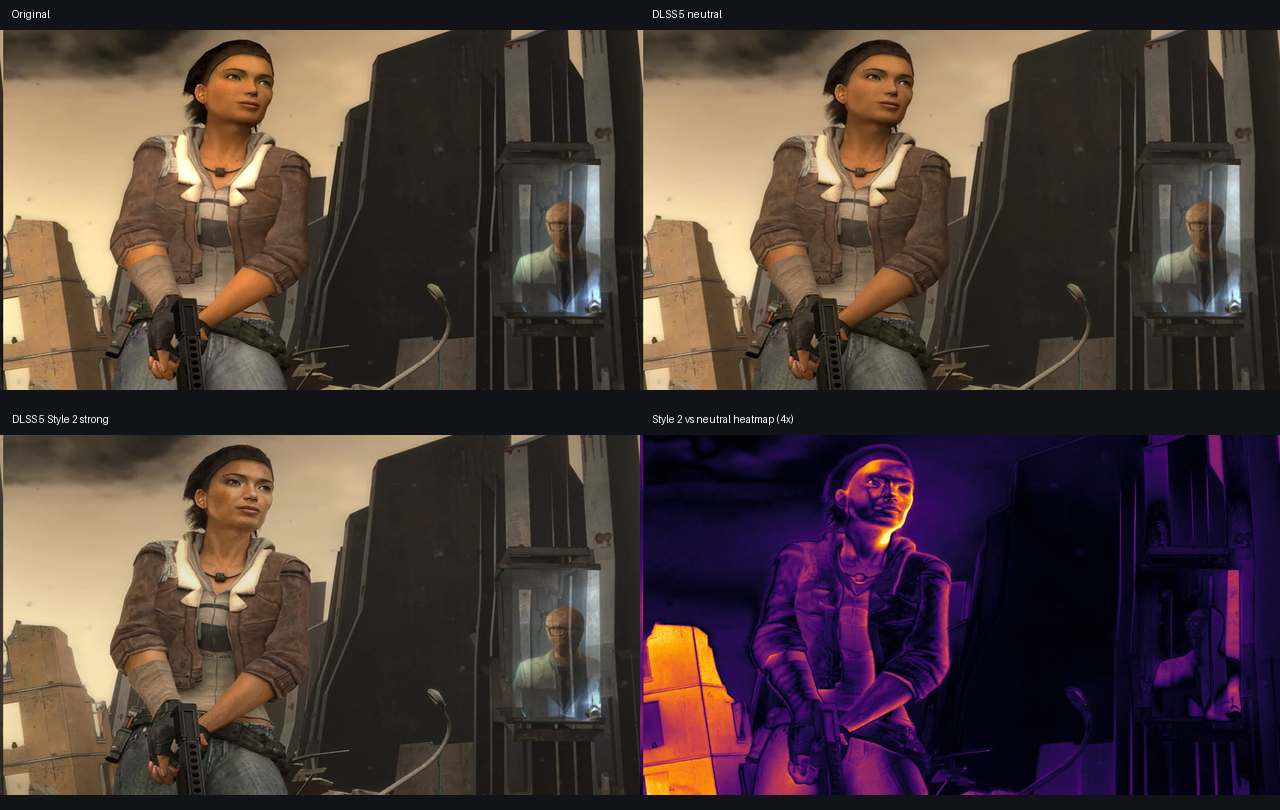
Alyx comparison: original, neutral rendering, stronger neural style, and a difference heatmap. Images retain their original aspect ratio.
What this extension does
- Runs NVIDIA DLSS Super Resolution at 2x, 3x, or 4x.
- Runs the experimental neural rendering pass exposed by a user-supplied
nvngx_dlssnr.dll. - Accepts depth and dense motion-vector guides.
- Includes Depth Anything V2, temporally consistent Video Depth Anything Small, and RAFT guide nodes.
- Offers FlashDepth as an isolated, optional high-resolution video-depth backend.
- Stabilizes per-frame depth by reprojecting previous depth with backward motion.
- Supports one persistent native context for short and medium sequences.
- Provides bounded overlap-add processing as a lower-memory fallback.
- Uses memory-mapped files for large native bridge inputs and outputs.
It does not turn an arbitrary photograph into a physically correct game-engine render. Game integrations have native geometry, material buffers, exposure data, jitter, accurate motion vectors, and engine-specific training assumptions. Here, depth and motion are estimated from pixels, so results can differ substantially.
Current status
This is an experimental alpha release. It was locally validated on Windows with an RTX 5090, 24 fps input, 2x scaling, Depth Anything V2 Small, RAFT Large, and a user-supplied neural-rendering runtime.
Known limitations:
- Windows and NVIDIA D3D12 only.
- Runtime compatibility depends on the exact NVIDIA DLL, driver, GPU, and wrapper build.
Persistent full sequenceremoves native chunk resets but ComfyUI still owns the full IMAGE batch.- Long films should use
Bounded overlap-adduntil a file-to-file streaming node is released. - HDR, alpha, variable-frame-rate video, subtitles, scene-cut resets, and multi-hour processing need broader testing.
- Depth Anything and RAFT download model weights on first use.
Visual examples
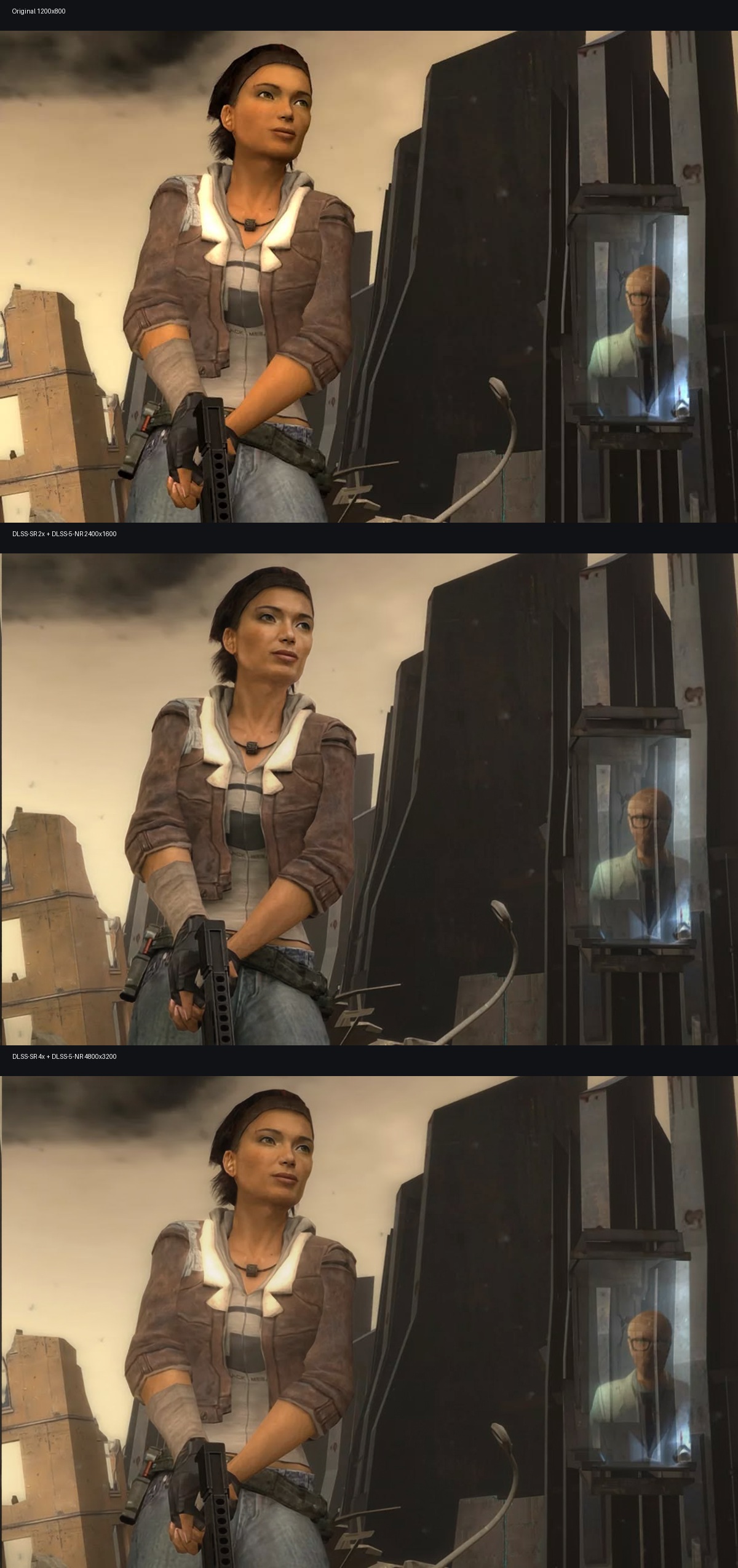
2x and 4x output
The comparison canvas preserves aspect ratio; images are fitted, never stretched.

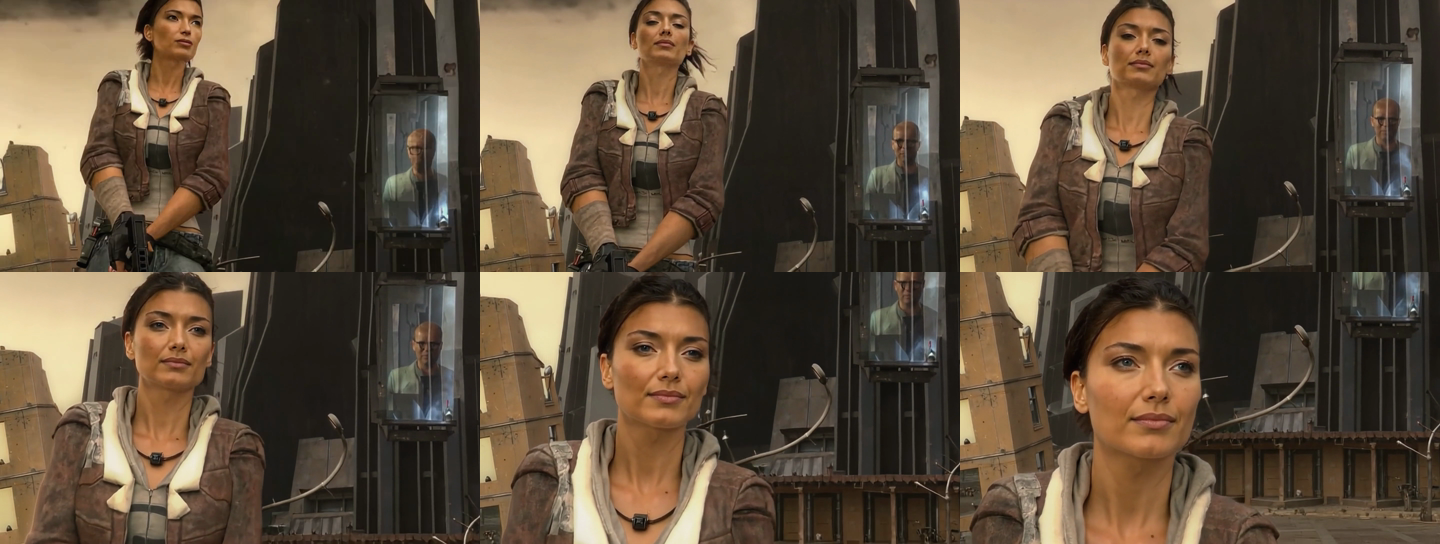
Persistent 10-second video test
Six un-stretched frames sampled from a 241-frame, 1920x1088, 24 fps output produced with one persistent SR context and one persistent NR context.

Measured on that test:
| Metric | Result | |---|---:| | Frames | 241 | | Duration | 10.0417 s | | Output | 1920x1088 at 24 fps | | Mean temporal MAE ratio vs. source | 1.005 | | Former 8-frame boundary excess | 0.000062 | | Non-boundary excess | 0.000064 | | Boundary/non-boundary ratio | 0.966 |
The fixed 8-frame discontinuity was not measurable above ordinary frames in this sample. This is a result for one test clip, not a universal quality guarantee.
Requirements
- Windows 10 or 11, 64-bit.
- NVIDIA RTX GPU with a sufficiently recent driver for the selected runtime.
- A working ComfyUI installation with PyTorch/CUDA.
- At least 16 GB system RAM; 32 GB or more is recommended for video.
- Generous temporary storage. Persistent 2x video processing can temporarily require many gigabytes.
- An extracted VapourKit build containing:
python.exewith VapourSynth supportvsdlsssr.dllvsdlssnr.dllnvngx_dlss.dll
- A legally obtained, user-supplied
nvngx_dlssnr.dllcompatible with the wrapper.
See Runtime sources and legal notes before installation.
Where to get every required component
| Component | Files used by this extension | Source | Setup handling |
| --- | --- | --- | --- |
| ComfyUI | ComfyUI installation | Official ComfyUI repository | Pass its directory to -ComfyUIPath. |
| This extension | Python nodes, workflows, setup script | ComfyUI-DLSS5 releases | Clone or extract it; do not copy runtime DLLs into Git. |
| VapourKit Windows runtime | VapourSynth python.exe, vsdlsssr.dll, vsdlssnr.dll, nvngx_dlss.dll | VapourKit project, tested 2026-08-31 nightly, and official community Discord | Extract it and pass the root directory to -VapourKitPath; setup locates the files recursively. Discord is a support/community link, not proof that a particular uploaded proprietary DLL may be redistributed. |
| NVIDIA DLSS reference/runtime licensing | DLSS documentation and official SR SDK/runtime source | Official NVIDIA/DLSS repository and NVIDIA DLSS developer page | Read the included licenses. The tested VapourKit package already supplies the SR runtime expected by setup. |
| Experimental neural-rendering runtime | nvngx_dlssnr.dll | No generally available official NVIDIA download was identified for this experimental file at release time. Use only a copy from software you legally obtained and whose terms permit this use. | Pass the exact local file to -NeuralRuntimeDll. The file is copied only into the ignored local runtime directory. |
| Depth guide | Depth Anything V2 Small/Base/Large weights | Depth Anything V2 Small model card and Depth Anything organization | Downloaded automatically by Transformers on first use. |
| Temporal video depth (recommended) | Video Depth Anything Small source and weights | Official repository and official VDA-S weights | The VDA node downloads the Apache-2.0 source at a pinned commit and official weights on first use. |
| High-resolution video depth (optional) | FlashDepth source, isolated environment, and checkpoint | Official repository and official weights | Follow the isolated setup guide; ComfyUI's Torch environment is never replaced. |
| Motion guide | TorchVision RAFT Small/Large weights | TorchVision RAFT documentation | Downloaded automatically by TorchVision on first use. |
| Video loading/encoding | Video Helper Suite custom nodes | ComfyUI-VideoHelperSuite | Optional for the supplied video workflows; install through ComfyUI Manager or from its repository. |
| GPU driver | Current NVIDIA Windows driver | Official NVIDIA driver download | Install outside ComfyUI and restart Windows if requested. |
ReShade, game-specific injectors, DLSS override utilities, and Nexus mods are not dependencies of this extension. Do not download a DLL merely because its filename matches: provenance, version compatibility, licensing, and integrity still matter.
One-time setup
Recommended: ComfyUI Manager + one-click runtime setup
- Install ComfyUI-DLSS5 with ComfyUI Manager. Until the Registry listing is approved, use Manager's Git URL installation with
https://github.com/HECer/ComfyUI-DLSS5. - Restart ComfyUI once so Manager installs the dependencies declared in
pyproject.toml/requirements.txt. - Add DLSS Runtime Setup (One Click) to a workflow, leave
actionatCheck location, and queue it. The output shows the exact localruntimedirectory and creates it if necessary. - Copy your legally obtained
nvngx_dlssnr.dllto that displayed location. Keep the exact filename. - In the same node, select
Install verified VapourKit, enableconfirm_download, and queue it again.
The installer downloads the pinned VapourKit Windows nightly, verifies its published SHA-256 (af3ecfb868a96477ab10e1588d7bac0fb2729332f2f464b998677efdee9e0554), extracts it into the ignored local runtime directory, locates all wrappers/runtimes, and writes runtime/config.json. Restart ComfyUI and run DLSS 5 Runtime Status.
The 368 MB VapourKit archive is downloaded only once. Extracted files and configuration remain local and are excluded from Git and Registry packages. The installer never downloads nvngx_dlssnr.dll.
No terminal or PowerShell command is required for the recommended path. install_runtime.ps1 and install_runtime.py remain available as headless/manual alternatives.
Manual/existing VapourKit setup
1. Clone the extension
git clone https://github.com/HECer/ComfyUI-DLSS5.git
cd ComfyUI-DLSS5
The repository may live anywhere. The setup script creates a junction in ComfyUI's custom_nodes directory.
2. Obtain and extract VapourKit
Download a compatible Windows build from the official VapourKit project or its nightly releases. The release used during development was the 2026-08-31 nightly:
- https://github.com/Kim2091/vapourkit
- https://github.com/Kim2091/vapourkit-nightly/releases
- https://github.com/Kim2091/vapourkit-nightly/releases/tag/nightly-2026-08-31
Keep the extracted directory. The extension records the path to its isolated VapourSynth Python runtime.
3. Obtain the neural-rendering runtime
Provide your own nvngx_dlssnr.dll. This repository intentionally does not link to unauthorized mirrors, bypass tools, leaked packages, or copyrighted game archives. If your copy came with software you are licensed to use, verify that its terms permit your intended use.
4. Run setup once
.\setup.ps1 `
-ComfyUIPath "O:\AI\ComfyUI" `
-VapourKitPath "O:\Tools\VapourKit" `
-NeuralRuntimeDll "O:\Runtimes\nvngx_dlssnr.dll" `
-TempDirectory "O:\ComfyTemp\DLSS"
The script validates required files, copies the selected local runtime DLLs into the ignored runtime directory, writes an ignored machine-local runtime/config.json, and creates a junction under custom_nodes when needed. ComfyUI Manager/Registry installs the declared Python dependencies; manual Git installations must install requirements.txt once with ComfyUI's Python interpreter.
It does not download or install a neural-rendering DLL. The bridge requests VapourKit's caller-check compatibility option; this repository does not patch the proprietary runtime. Review the licenses and terms for every locally supplied component before enabling it.
Restart ComfyUI after setup. Add DLSS 5 Runtime Status and confirm that every path reports READY.
Easiest path: one node
Add Experimental DLSS — Easy Upscale & Render, connect an IMAGE batch, and choose a scenario:
Still imageuses lightweight zero/optical motion and one native context.Short video / best qualityuses RAFT Large and a persistent context.Long video / memory efficientuses RAFT Small and bounded overlap-add.Fast previewuses CPU optical flow and small bounded windows.
Auto (recommended) selects still mode for one frame, the quality-video preset for up to 96 frames, and the memory-efficient long-video preset above that threshold.
Choose Upscale only, Neural rendering only, or Upscale + neural rendering. The node automatically estimates and temporally stabilizes depth and creates current-to-previous motion guides, then runs only the selected stages. Neutral / faithful is the safest evaluation look. The Easy node favors practical defaults; use the standalone or Advanced nodes when you have engine-authored depth/motion or need exact controls.
ComfyUI workflow screenshots
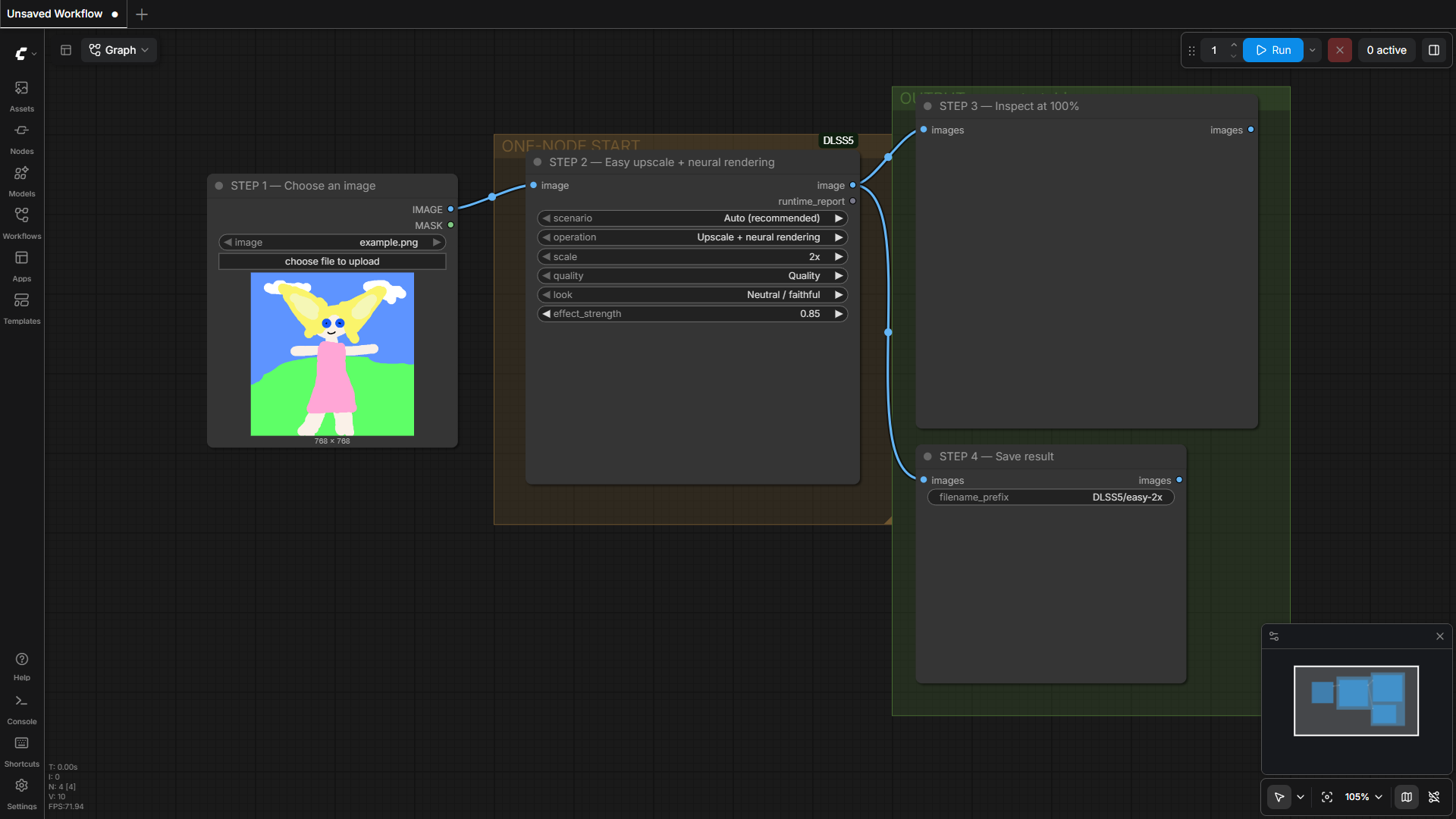
Easy one-node workflow
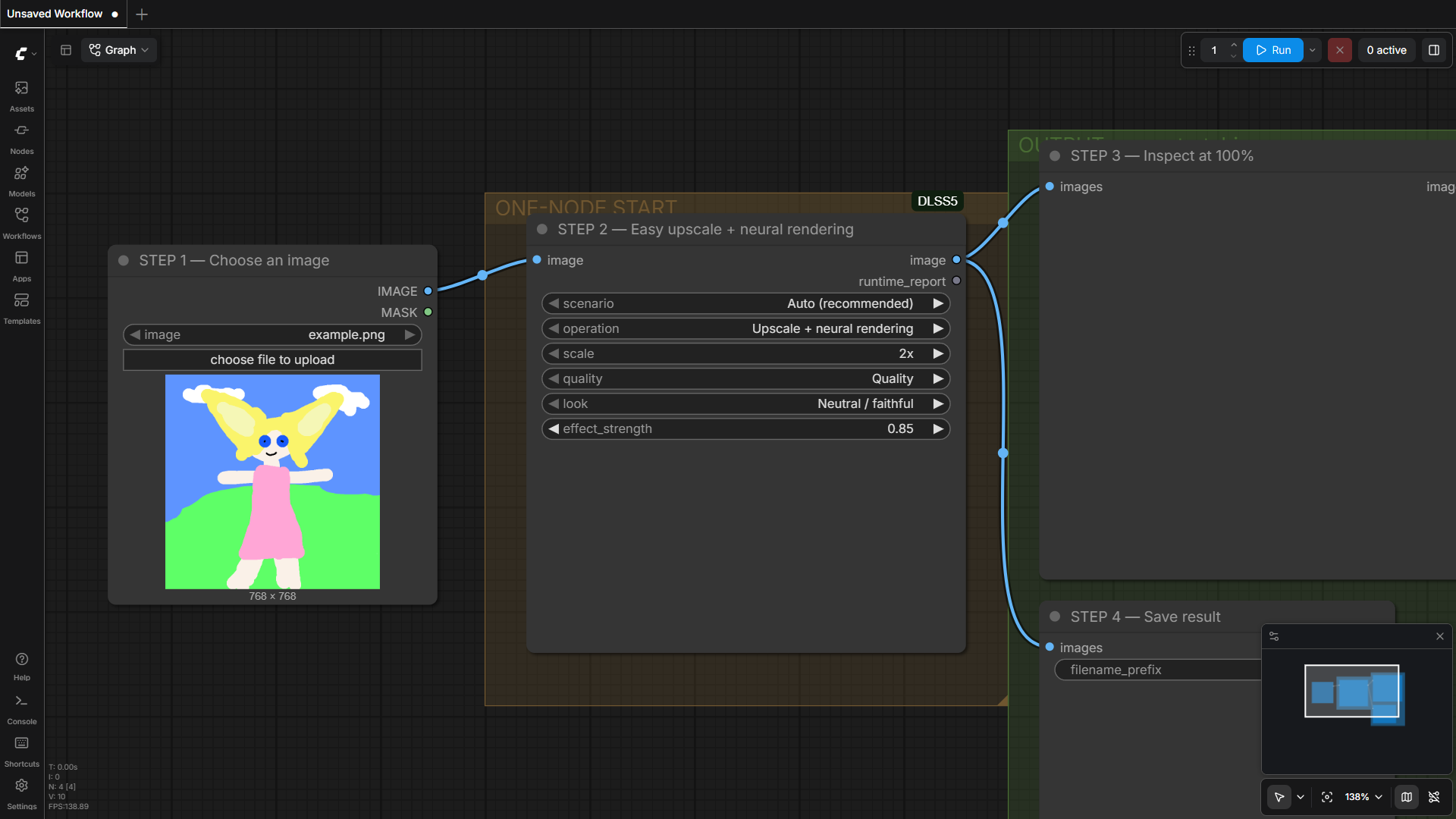
Import workflows/00_easy_one_node_2x.json for the recommended first run. Select an image, choose the scenario and operation in the central Easy node, then inspect or save the output. The graph keeps setup choices in one place while still exposing the generated image and runtime report.

The detailed view shows every Easy-node control: scenario, independent upscale/render operation, 2x–4x scale, DLSS quality preset, rendering look, and effect strength.

Advanced guided workflow
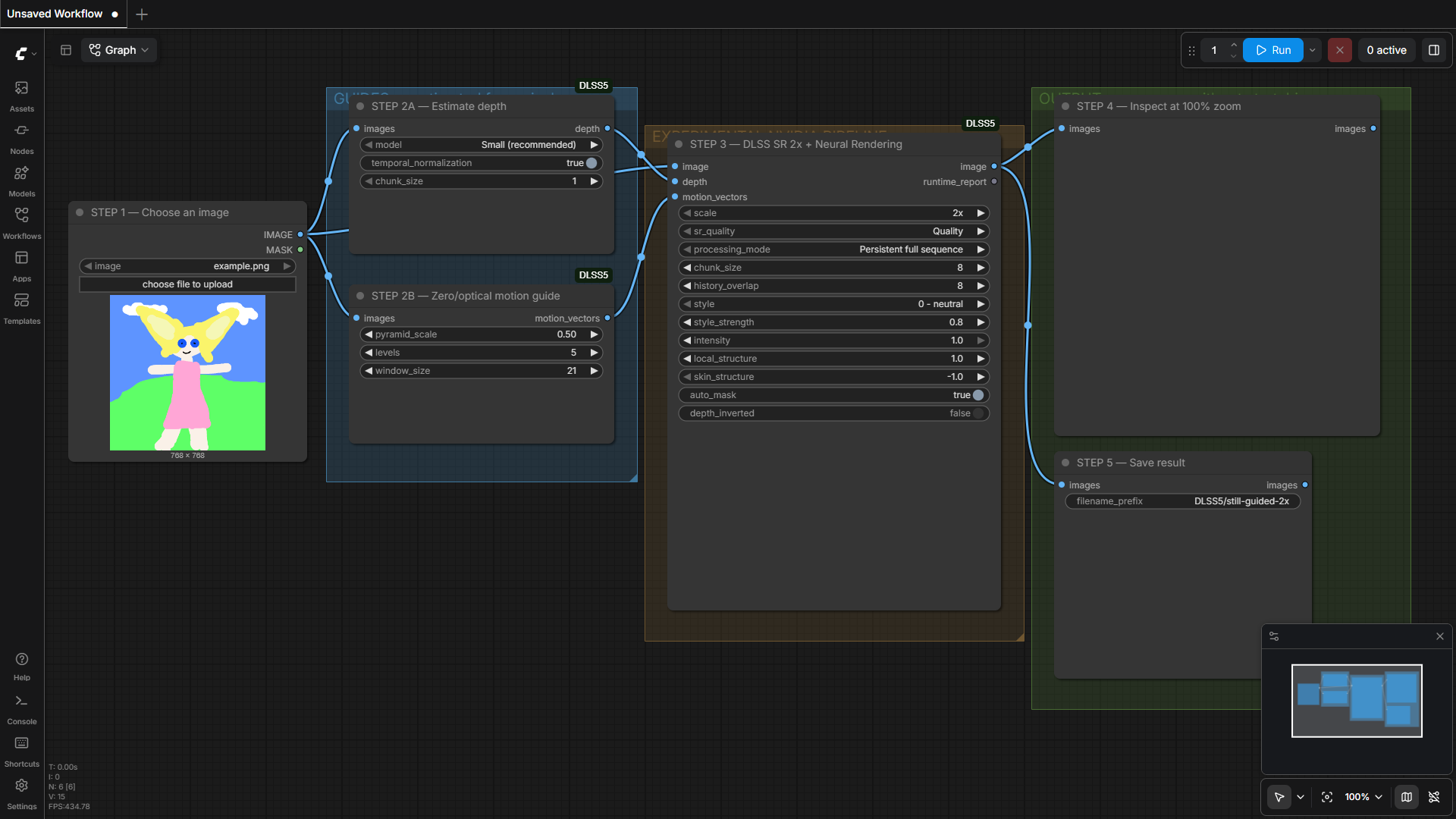
Import workflows/01_still_image_guided_2x.json when you want direct control over guide generation and the native pipeline. Depth Anything V2 supplies depth, the motion-guide node supplies current-to-previous motion, and the full pipeline receives color, depth, and motion as separate inputs.

The close view makes the full-pipeline controls readable, including processing mode, history overlap, neural style, style strength, intensity, structure controls, automatic effects masking, and depth orientation.

These screenshots show node layout and settings only; the placeholder image is bundled with ComfyUI and is not a quality result. See the Alyx comparison and persistent-video contact sheet above for representative output examples.
Temporal video-depth workflows
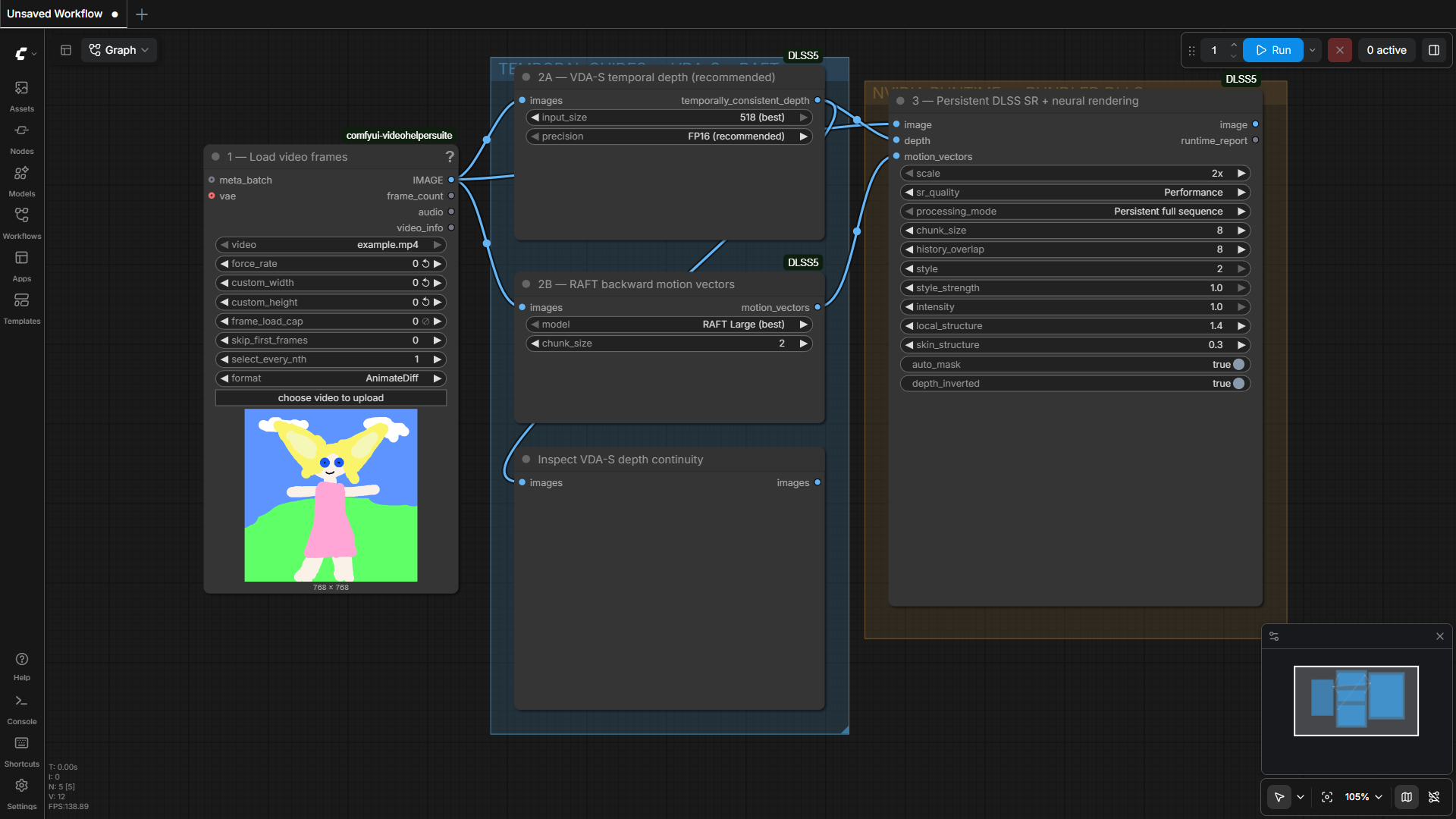
For new video projects, import workflows/04_video_vda_small_temporal_2x.json. VDA-S reasons over 32-frame temporal windows and aligns overlapping windows, so it replaces the framewise Depth Anything V2 plus stabilizer chain. RAFT remains responsible for the separate motion-vector guide.


The optional workflows/05_video_flashdepth_highres_2x.json targets high-resolution footage. FlashDepth is intentionally executed in its own environment because its official dependencies conflict with many current ComfyUI builds.


Tested still-image variants
The two synthetic sources were processed through the local NVIDIA runtime. Each test produced six files:
- Original at source resolution
- Neural Rendering only, neutral style, at source resolution
- Neural Rendering only, style 2, at source resolution
- DLSS Super Resolution only, Performance preset, at 2× resolution
- 2× DLSS SR followed by neutral Neural Rendering
- 2× DLSS SR followed by style 2 Neural Rendering
The runtime reports identify Neural Rendering as DLSS-NR 310.8, Feature 18, with depth and motion guides. A still image is duplicated internally to initialize the temporal runtime; these tests do not measure video stability.
Gordon Freeman face test
The source mimics an early-2000s low-poly game render. Its flat skin, angular jaw, blocky hair, painted beard, and jagged glasses give the runtime obvious defects to work with. Neutral Neural Rendering adds skin variation and softens hard transitions around the nose, cheeks, lips, and eyes. Style 2 preserves more of the source's flat shading. DLSS SR doubles the image from 1672×941 to 3344×1882 without changing its framing.


Open the full-resolution Gordon Freeman files
Alyx face test
The Alyx source is a 1200×800 game image supplied for testing. The face has limited skin texture, simple hair, hard clothing edges, and older real-time shading. Neutral Neural Rendering adds restrained facial texture. Style 2 changes the cheeks, lips, eyes, and neck more strongly. DLSS SR produces a 2400×1600 image before the combined NR passes.


Open the full-resolution Alyx files
Rainy city
This image tests wet hair, skin, bicycle spokes, chain-link fencing, tram wires, foliage, masonry, small lights, and reflected highlights. Style 2 changes facial contrast and local surface structure more strongly than the neutral setting. The 2× files retain more pixels around the fence, spokes, hair, and distant windows.


Open the full-resolution rainy-city files
Industrial corridor
This image tests perforated panels, visor edges, cables, fabric, scratched metal, steam, small background objects, and a long central perspective. The styled variants change the face and clothing most visibly. The 2× outputs make the dense cable and panel structure easier to inspect at native resolution.


Open the full-resolution industrial-corridor files
The overview sheets resize every panel proportionally. The detail sheets compare the same center region: 1× crops are enlarged by an exact 2× with nearest-neighbor sampling, while SR crops are shown at their native 2× size. No panel changes the source aspect ratio.
Measured mean absolute pixel differences:
| Test | NR neutral vs. original | NR style 2 vs. original | 2× SR + neutral NR vs. 2× SR | 2× SR + style 2 NR vs. 2× SR | | --- | ---: | ---: | ---: | ---: | | Rainy city | 0.0274 | 0.0264 | 0.0224 | 0.0213 | | Industrial corridor | 0.0260 | 0.0261 | 0.0243 | 0.0283 | | Gordon Freeman | 0.0364 | 0.0185 | 0.0272 | 0.0164 | | Alyx | 0.0293 | 0.0478 | 0.0217 | 0.0361 |
These values measure how many pixels changed, not whether the change is better. Judge faces, thin edges, reflections, and distant detail in the full-resolution files. Pixel-estimated depth and zero motion for a still cannot reproduce the native buffers available inside a game engine.
Quick start: still image
Import workflows/01_still_image_guided_2x.json.
- Select an input image.
- Depth Anything V2 estimates a depth guide.
- Motion is zero for a single still; temporal benefits require a sequence.
- The full pipeline performs 2x scaling and neural rendering.
- Preview or save the result.
For a single still, the neural runtime uses a duplicated initialization frame internally.
Quick start: video
Import workflows/04_video_vda_small_temporal_2x.json for the recommended temporally consistent depth path. Workflow 02 remains the lighter framewise fallback.
Recommended guide chain:
Video frames
├─> Depth Anything V2 ─> Temporal Depth Stabilizer ─┐
└─> RAFT current-to-previous motion ────────────────┤
v
DLSS SR + Neural Rendering
Start with a short clip. Confirm frame count, FPS, dimensions, and available temporary storage before processing longer sequences.
Processing modes
Persistent full sequence
Uses exactly one SR and one NR VapourSynth graph for the complete batch. It removes native chunk resets, avoids crossfade seams, and was the fastest mode in the local 33-frame comparison.
Use it when the complete ComfyUI IMAGE batch fits in RAM and sufficient temporary storage is available. It is not yet suitable for arbitrary multi-hour films because ComfyUI retains complete input and output tensors.
Bounded overlap-add
Processes overlapping native windows and blends duplicate frames with a raised-cosine curve. Use it when persistent mode exceeds available memory. Start with:
chunk_size: 8
history_overlap: 8
Larger chunks reduce overhead. More overlap gives a new native context more time to settle, at the cost of repeated work.
Node reference
NVIDIA DLSS Super Resolution (Unofficial Bridge)
Performs only Super Resolution. Inputs are color, depth, and motion vectors. scale supports 2x, 3x, or 4x. Quality presets are subject to runtime support.
Experimental DLSS Neural Rendering
Runs only the experimental neural-rendering pass at the current resolution.
style: runtime style index 0, 1, or 2.style_strength: requested style blend.intensity: overall effect intensity.local_structure: local structural emphasis.skin_structure: skin-specific structural control;-1leaves runtime behavior unchanged.auto_mask: requests the runtime's automatic effect mask.pre_scale: conventional bicubic preprocessing, not DLSS Super Resolution.depth_inverted: flips the expected depth convention.effect_mask: optional ComfyUI mask applied after rendering.
DLSS SR + Experimental Neural Rendering (Advanced)
Runs SR followed by neural rendering. processing_mode selects persistent or bounded overlap-add operation. chunk_size and history_overlap apply to bounded mode.
Depth Anything V2 Guide
Downloads and runs a Hugging Face Depth Anything V2 model. temporal_normalization uses one normalization range for the sequence, reducing framewise scale pumping.
Video Depth Anything (Temporal)
Downloads the official Apache-2.0 VDA-S implementation and weights on first use. It evaluates 32-frame temporal windows with upstream overlap alignment. Use 518 (best) when supported, 392 (fast) for normal previews, or 280 (compatible) when a newly released GPU lacks a compatible xFormers kernel. The node automatically uses PyTorch scaled-dot-product attention on post-Ada GPU architectures.
FlashDepth (External, Optional)
Runs the official FlashDepth inference entry point in a separate Python environment. Full is intended for high-resolution/2K footage; upstream recommends L below roughly 518 pixels on the short side. See FlashDepth setup. This backend is optional and was not added to ComfyUI's dependency list.
RAFT Motion Guide
Computes dense current-to-previous optical flow for temporal reprojection. R/G encode X/Y; 0.5 means zero motion.
Temporal Depth Stabilizer
Warps the previous stabilized depth into the current frame with RAFT motion, then blends where current and reprojected depth agree. disocclusion_threshold limits stale depth in newly visible regions.
Runtime Status
Reports resolved Python, wrapper, and runtime paths. Redact personal directory names before posting it publicly.
Models and downloads
The first guide-model run may access the internet:
- Depth Anything V2: https://huggingface.co/depth-anything
- Video Depth Anything Small: https://huggingface.co/depth-anything/Video-Depth-Anything-Small
- FlashDepth (optional): https://huggingface.co/Eyeline-Labs/FlashDepth
- TorchVision RAFT: https://pytorch.org/vision/stable/models/raft.html
Weights are cached by Hugging Face and PyTorch. Review their model cards and licenses before redistribution or commercial deployment.
Temporary storage and privacy
Native bridge arrays may be very large. Put TempDirectory on a fast SSD with ample free space. An OS crash may leave temporary files behind.
ComfyUI video outputs can embed the complete workflow and prompt as media metadata. This may expose local filenames, model names, settings, or paths. Inspect metadata before publishing generated media.
Troubleshooting
See Troubleshooting. Useful checks:
Get-Content .\runtime\config.json
python -m pytest -q tests
Never publish runtime/config.json; it contains machine-specific absolute paths.
Security
- Workflows are untrusted input. Review them before execution.
- Runtime DLLs execute native code with the permissions of ComfyUI.
- Verify provenance, hashes, licenses, and signatures where possible.
- A missing signature does not by itself prove malware.
- Report security issues through GitHub's private security advisory feature.
Project scope and naming
The repository uses “DLSS5” because that is how the experimental runtime has circulated publicly. This is not an official NVIDIA DLSS 5 SDK integration. UI labels remain for workflow compatibility and may change before 1.0 if authoritative naming changes.
DLSS and NVIDIA are trademarks of NVIDIA Corporation. All other names belong to their respective owners.
License
Extension source code is GPL-3.0. Runtime DLLs, NVIDIA components, model weights, VapourKit, VapourSynth, ComfyUI, and example source media remain under their own licenses and are not relicensed by this repository.
Credits
ComfyUI, VapourSynth, VapourKit, NVIDIA DLSS SDK/runtime components, TorchVision RAFT, and Depth Anything V2. See Runtime sources and legal notes.